A Mappy Time in Czechia II: Globes!
/It’s the Sunday of Labor Day weekend here in the USA, so an occasion to catch up on my planned second post about maps seen in Czechia during the recent trip to Prague for the International Conference on the History of Cartography. For the first, see my 14 July 2026 post re the maps in the Czech National Museum.
I want to give some idea about the number of globes that we encountered …
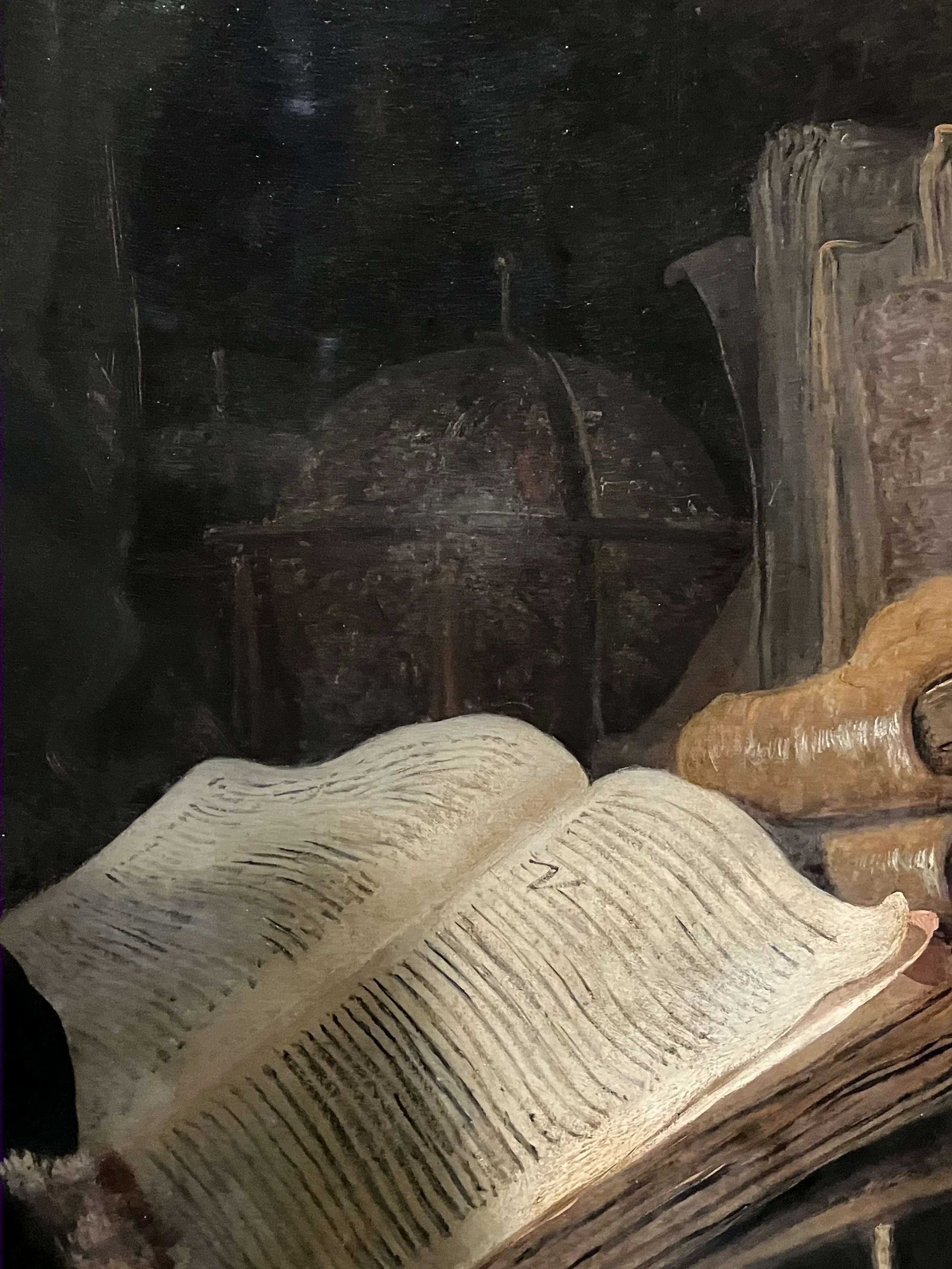
Globes have long been a symbol of learning and knowledge, and they kept cropping up in Prague, a center of learning since the Middle Ages. Here’s the Czech National Gallery’s Rembrandt, a 1634 painting of a scholar in his study:
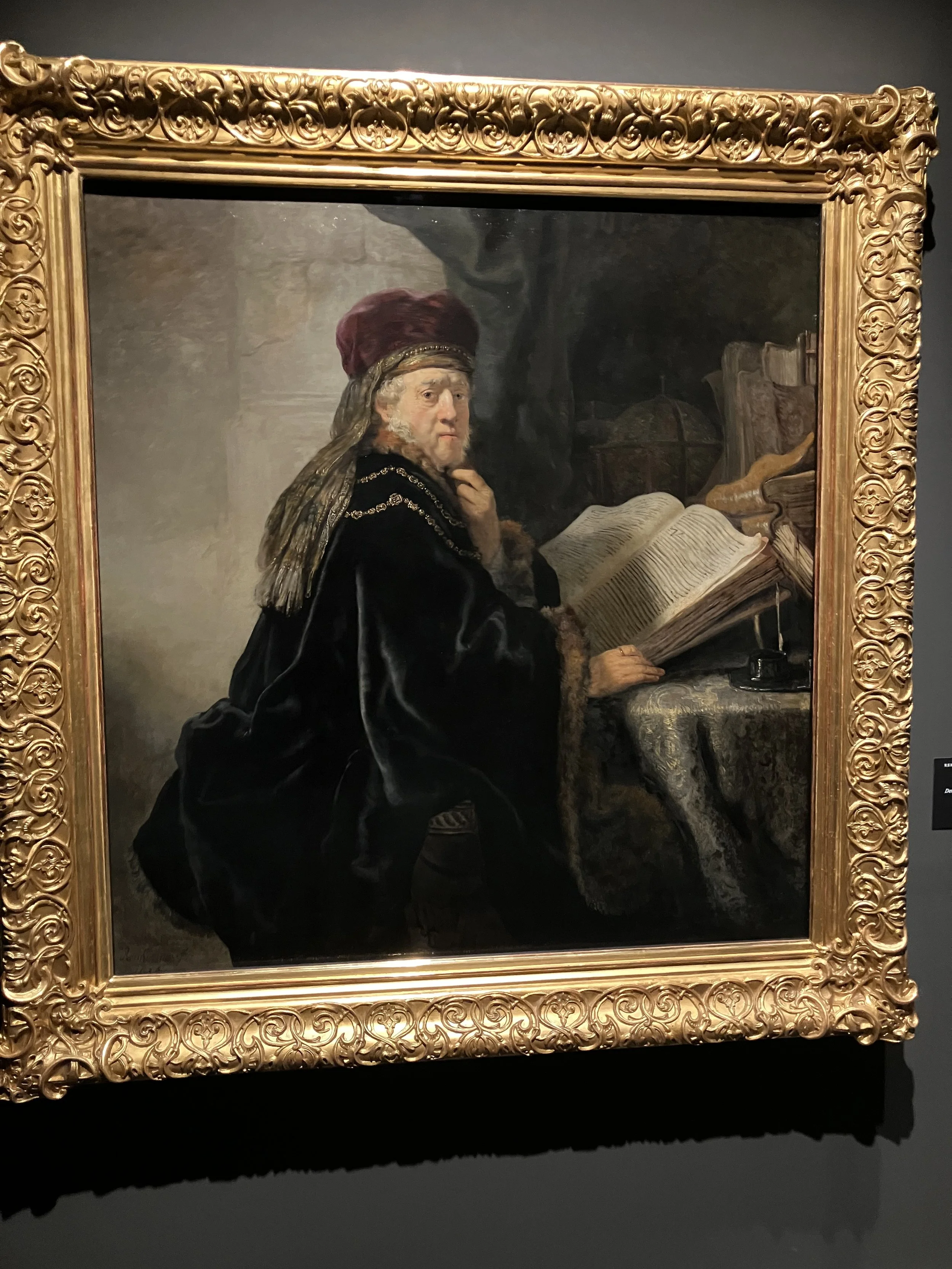
with a globe taking up significant work space on his desk:
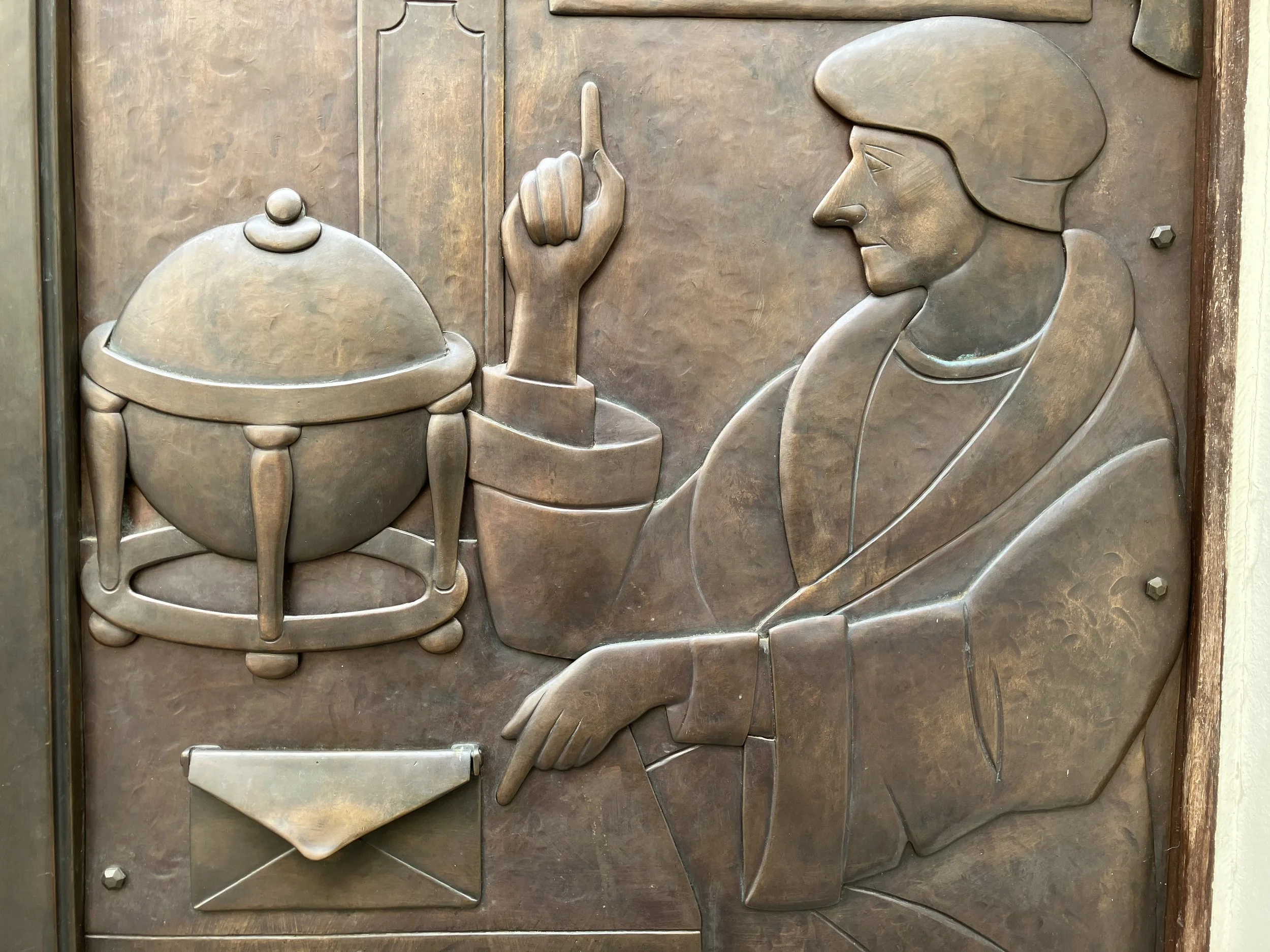
In the Lower Town, we encountered a grand building at Mostecka 17, with huge brass doors installed when the building was renovated in 2007/8. The doors are decorated with a design by Petr Cisarovsky, who imagined encounter between two reform-minded theologians, Jan Ámos Comenius of Prague and Desiderius Erasmus of Rotterdam (who actually died 56 years before Comenius’ birth). In particular, Erasmus is shown with a globe:
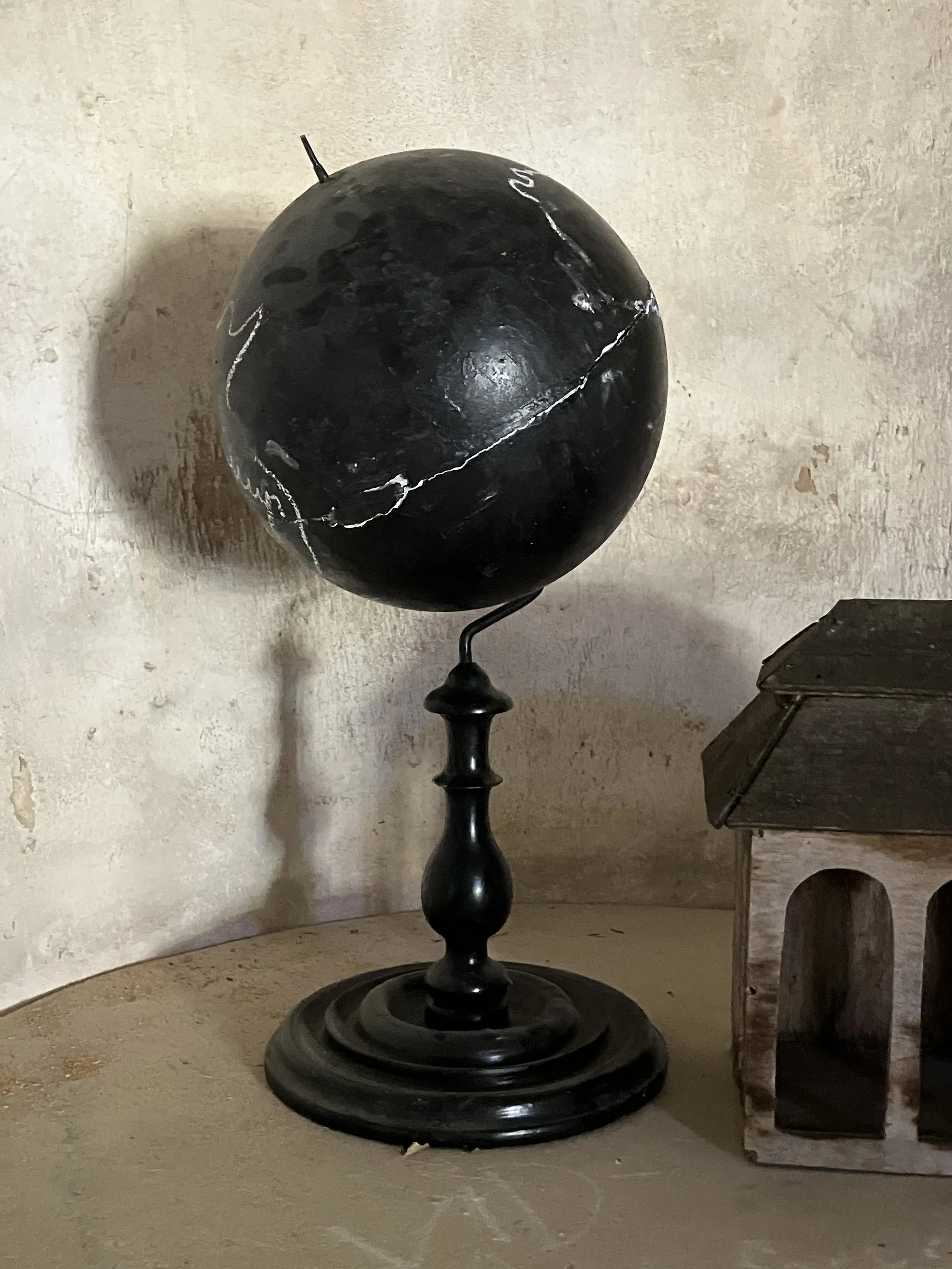
Several globes were seen in the palaces we visited on the post-conference tour around Eastern Bohemia, where we got quite close to the border with Poland. At the first stop, the Valdštejnská Lodžie in Jičín, an early Baroque garden structure closely associated with Albrecht von Wallenstein, we found a nineteenth-century black-painted teaching globe in a side room (the Oktagon):
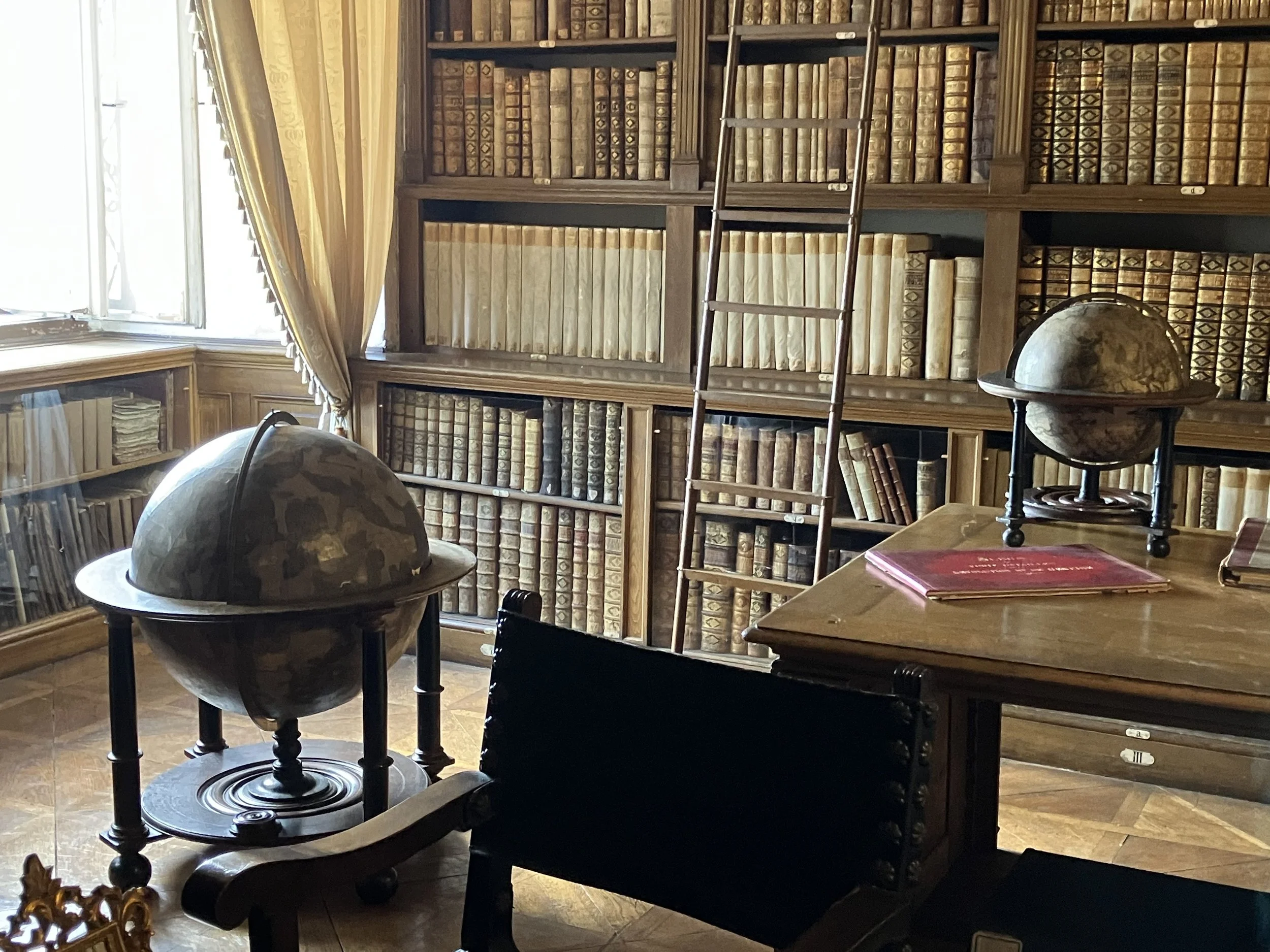
In the second stop—the amazingly stuffed Opočno (Schloß Opotscno), a Renaissance palace—we found several globes in the library:
Although a couple were in poor shape. Here’s one in the corner:
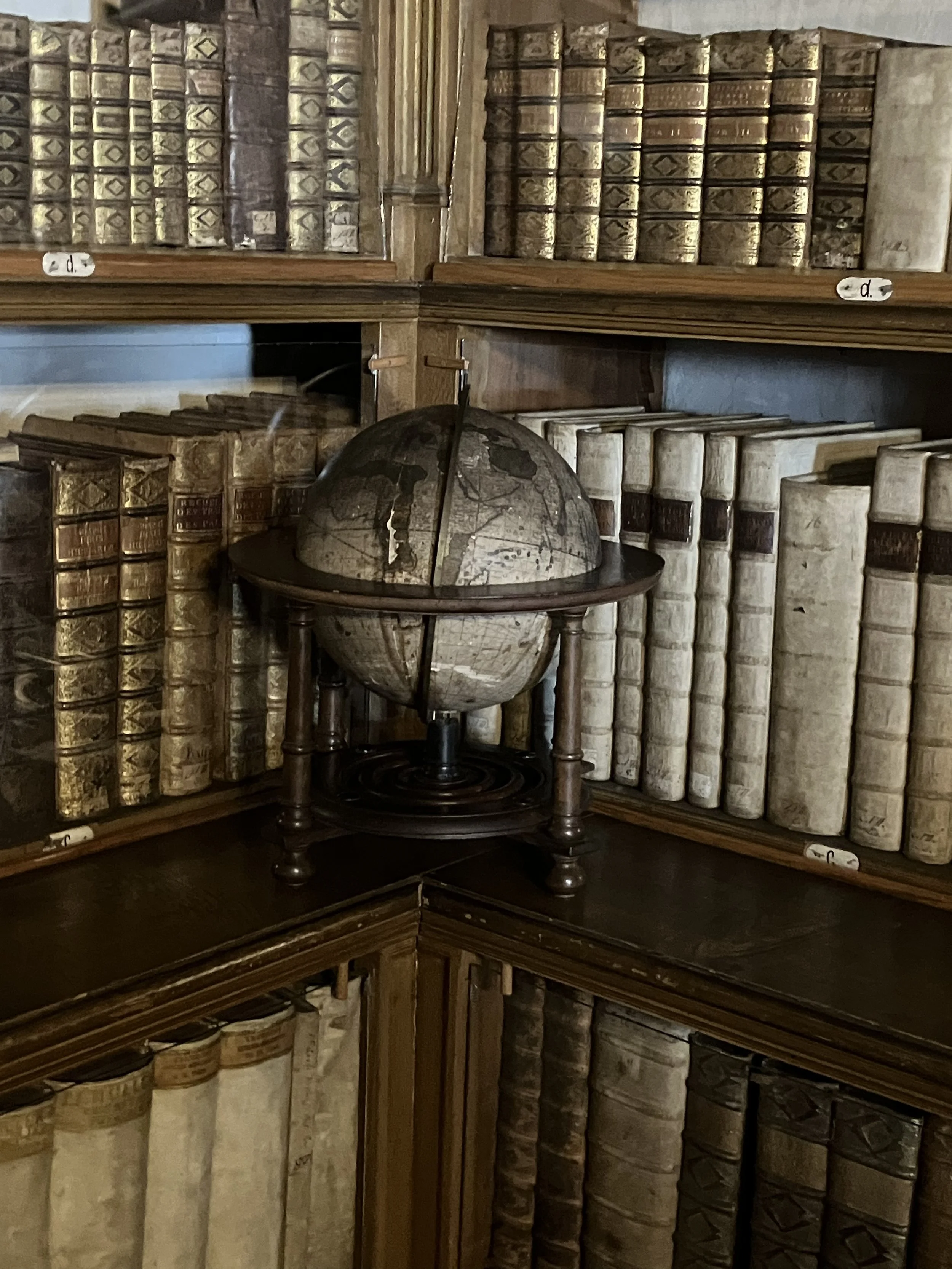
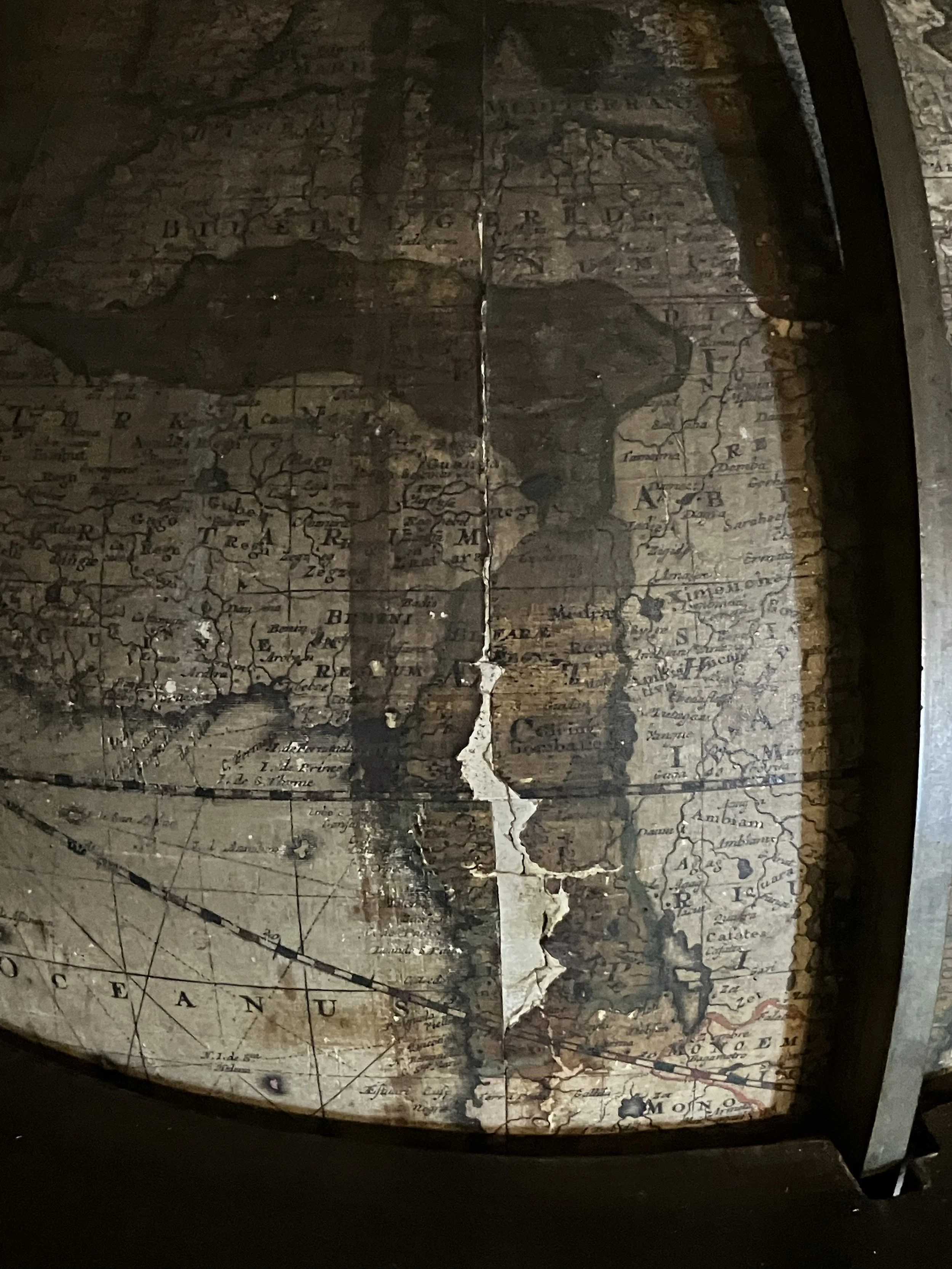
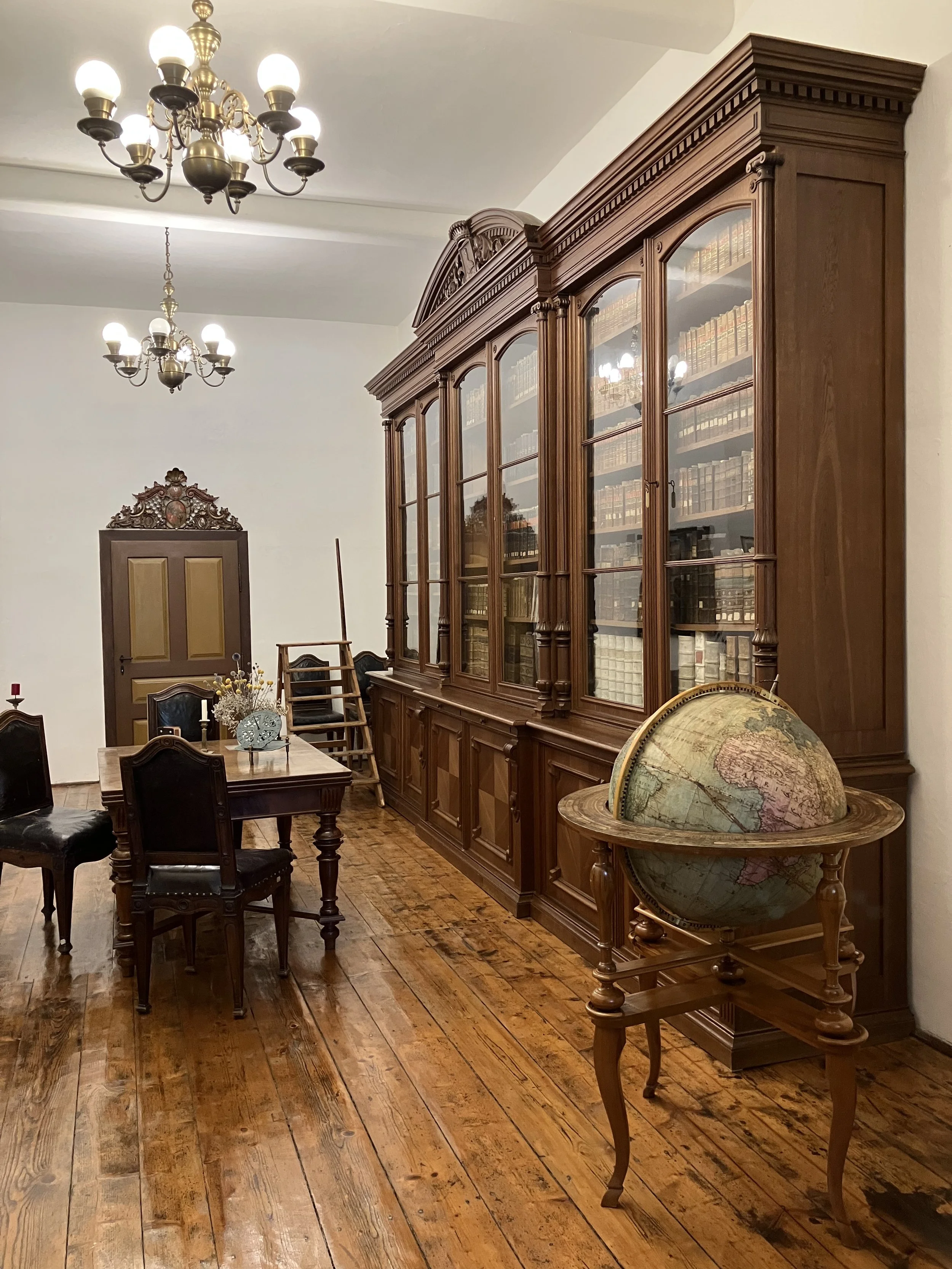
And then, again in a study (closed off to visitors) at the third stop, the Hospital Kuks, founded by Count František Antonín Špork.
Most Surprising Globe Encounter
The most surprising globe encounter was in Prague’s Museum of Design. Amidst a wide array of designed works, there is a sewing table made in Vienna in 1815 in form of a celestial globe. The gorgeous surface of the ball, which I presume opens up for storage of one’s sewing stuff, is not decorated, but the meridian band is painted with zodiacal constellations:
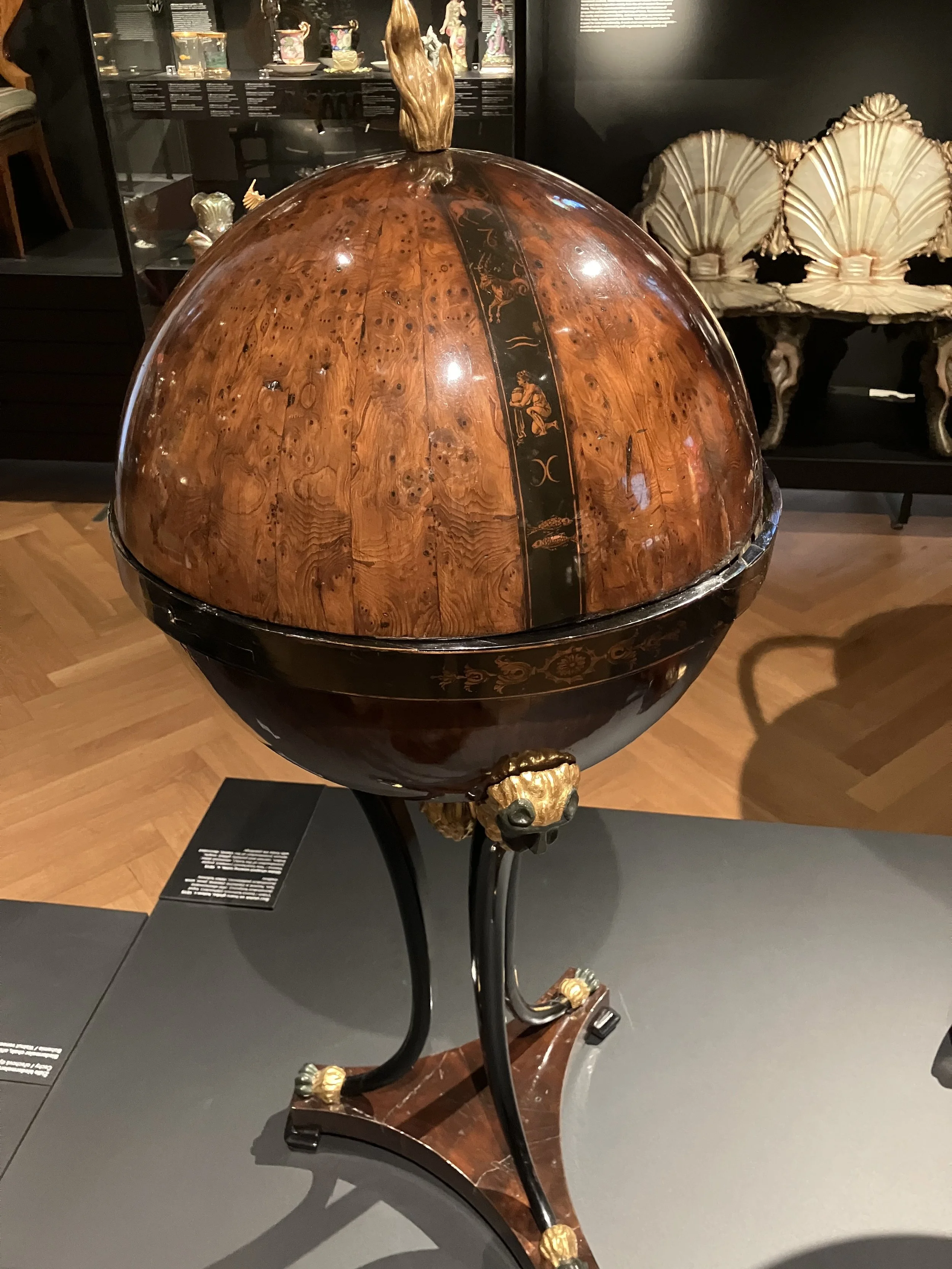
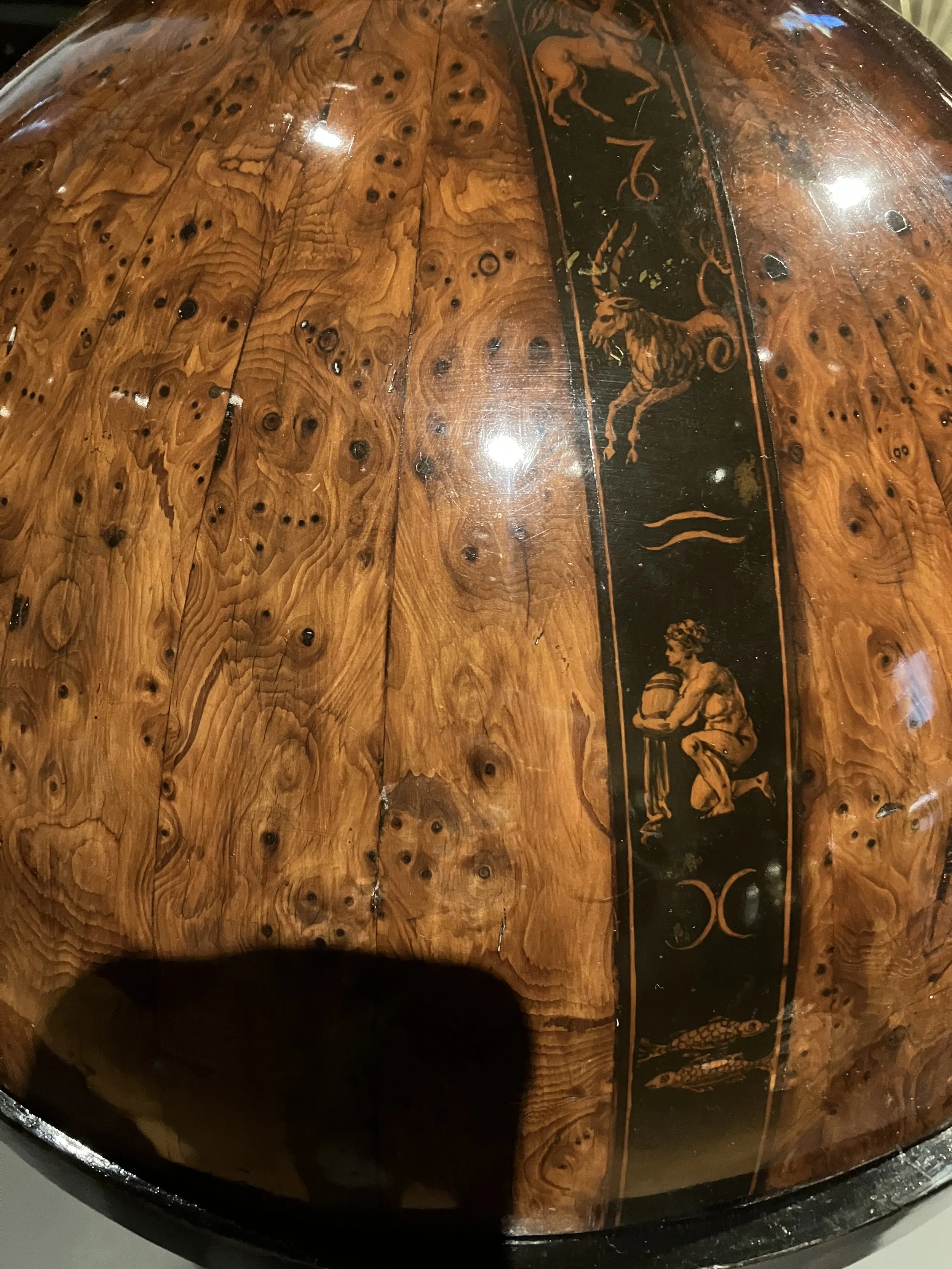
The materials were explained as follows. Ball: yew heartwood (veneer), poplar (construction of the body), ebonized alder. Frame: linden, carved and partially gilded. Stand: maple, spruce. All “decorated with India ink paintings.”
Large Collection with a Couple of Large Globes
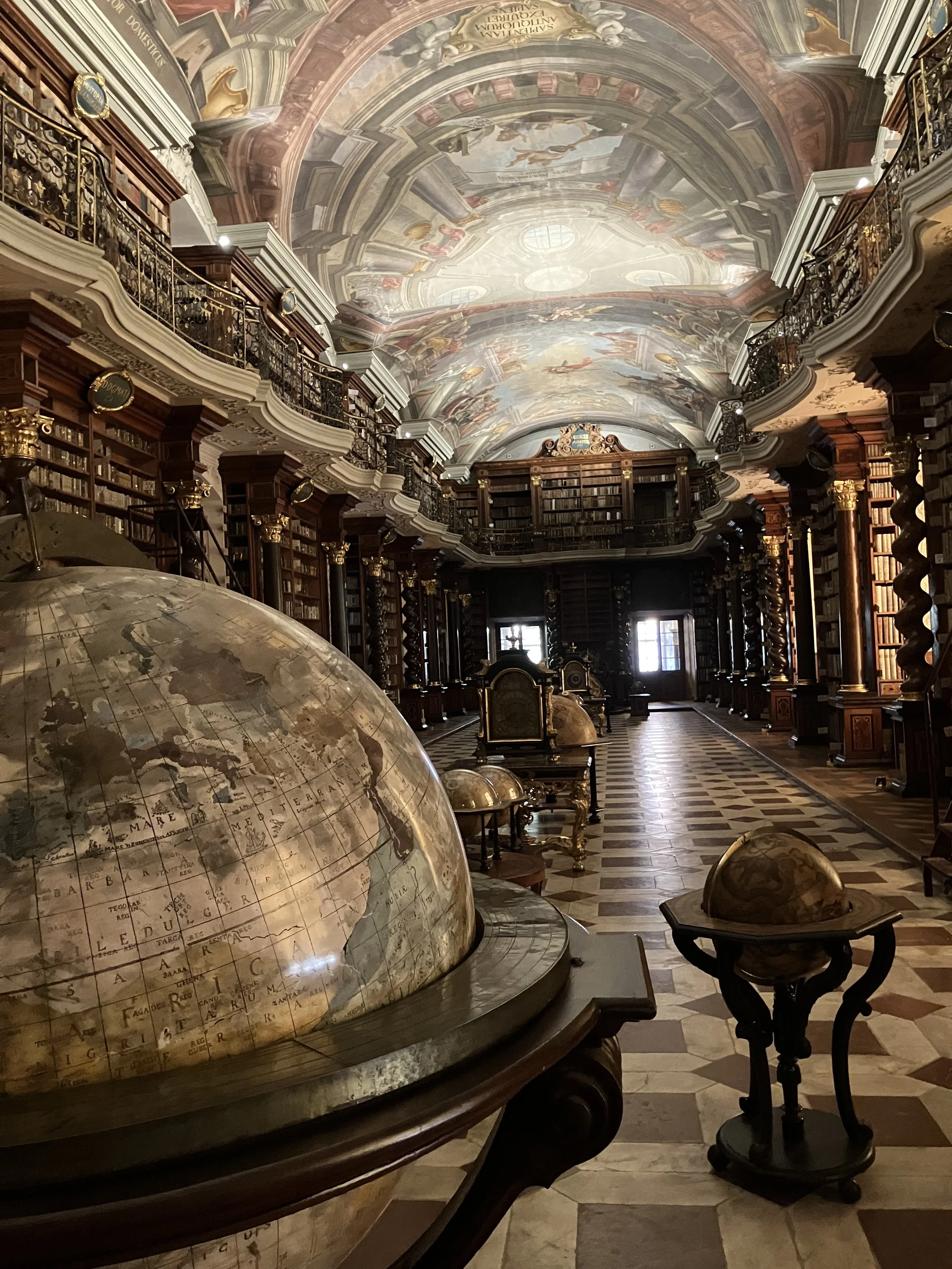
The densest array of globes was in the Klementinum, once a Jesuit College and now part of the Czech National Library, within the old Baroque reading room hall at its center. Various directors have collected a number of globes which are presented here. Conference goers were allowed direct access, much to the annoyance of people on the guided tours who were only permitted to look through the doors at the far end of the hall in this photo:
Same view, now with the rest of my group of conference goers:
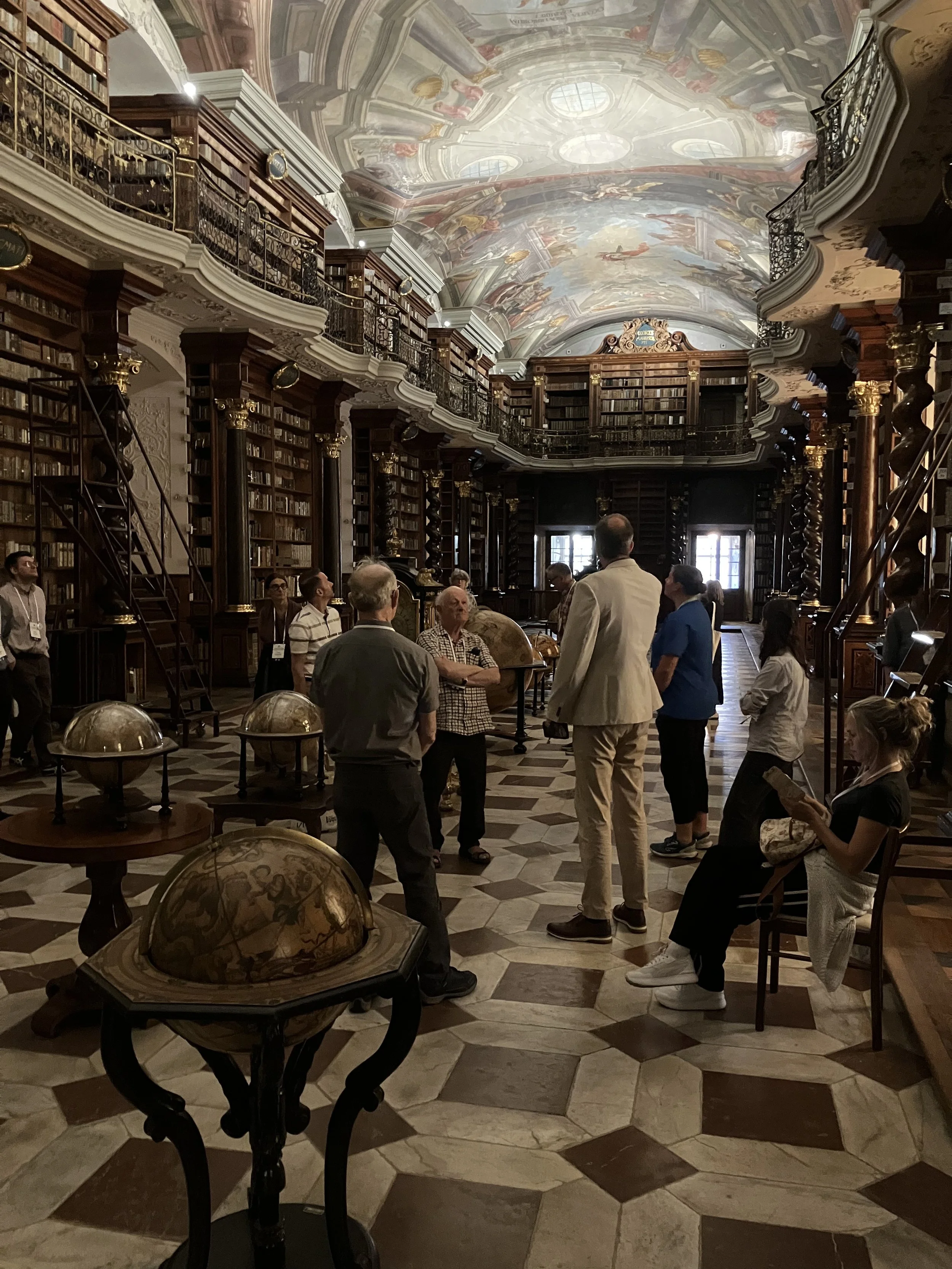
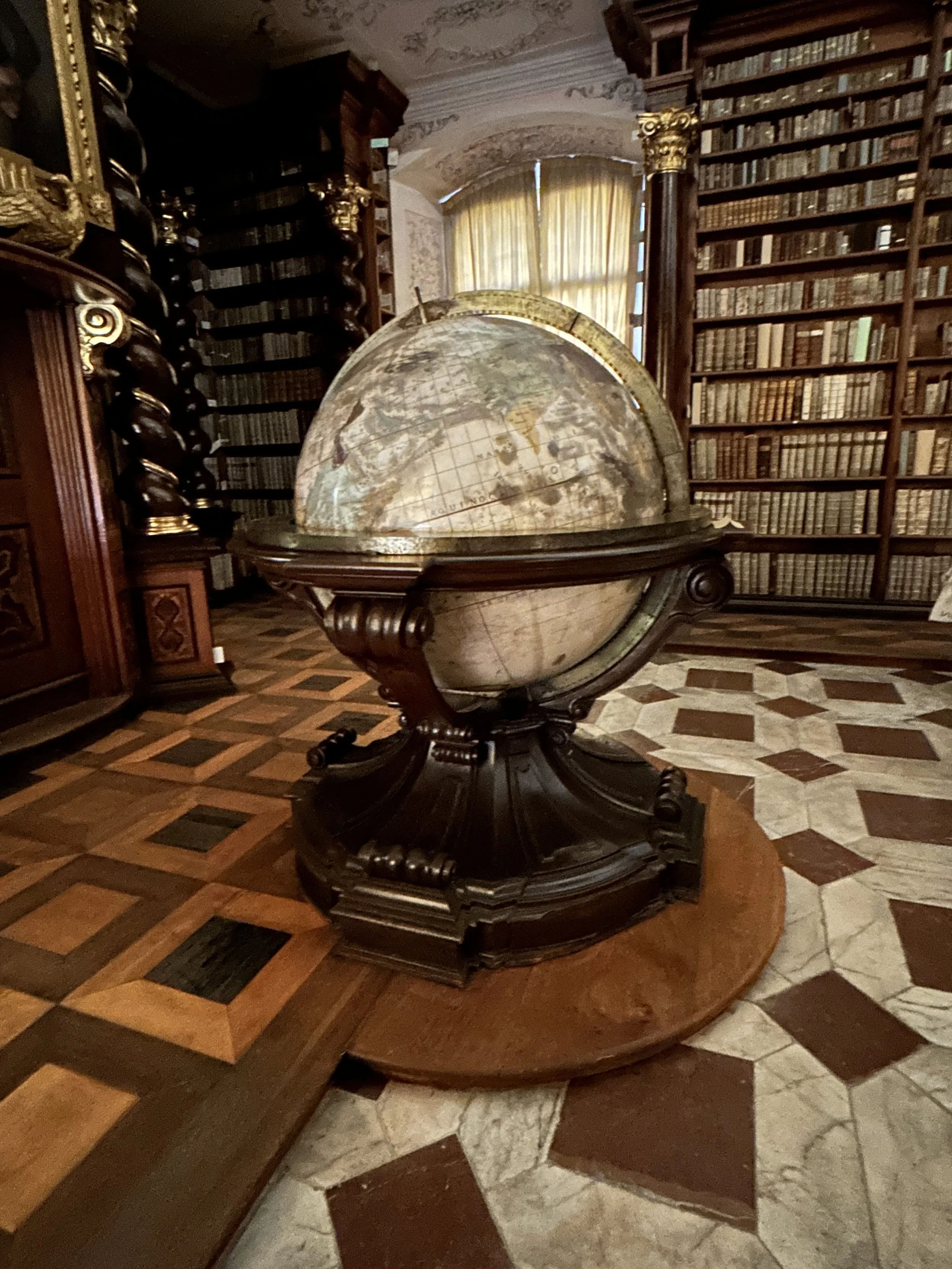
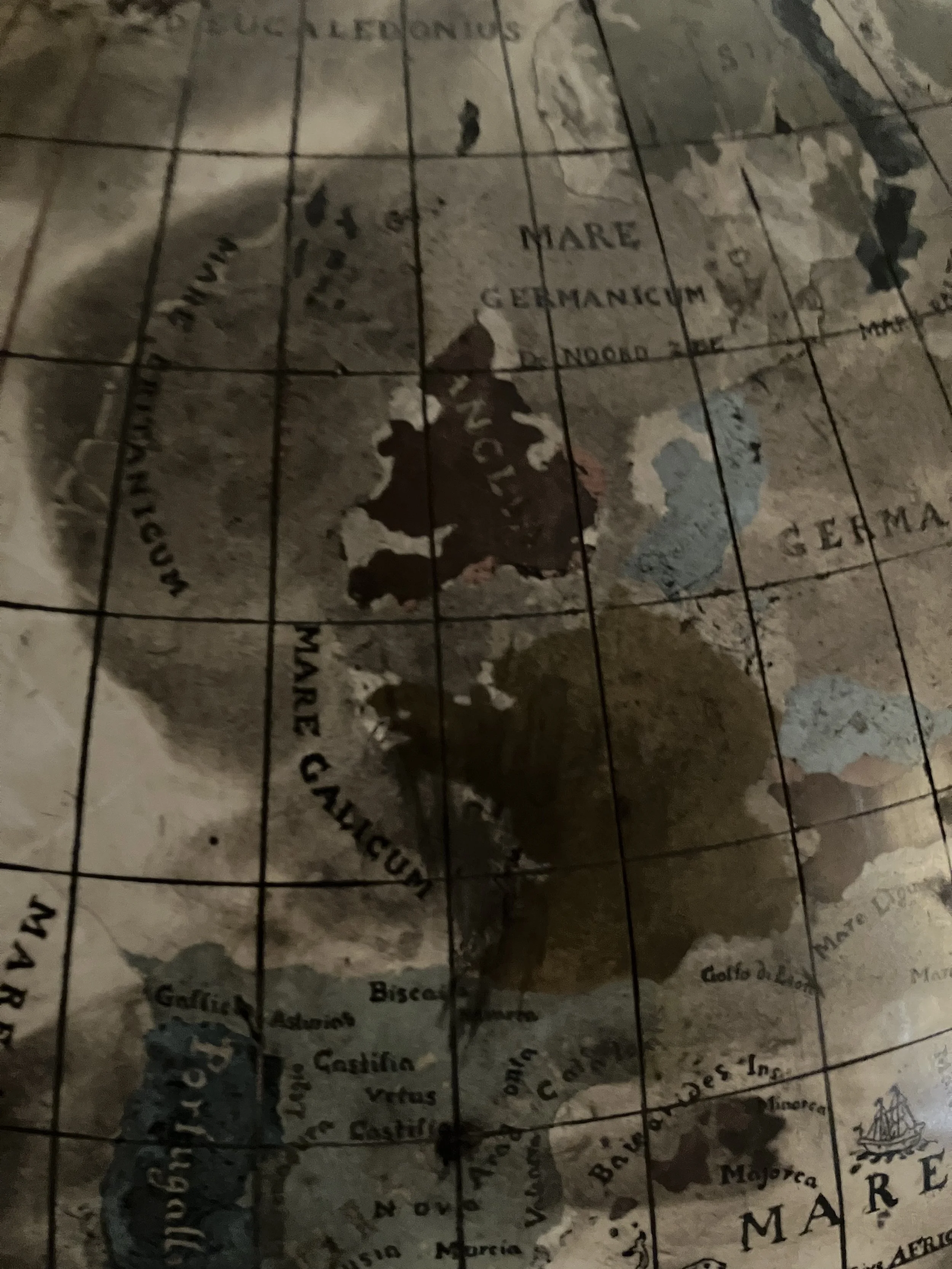
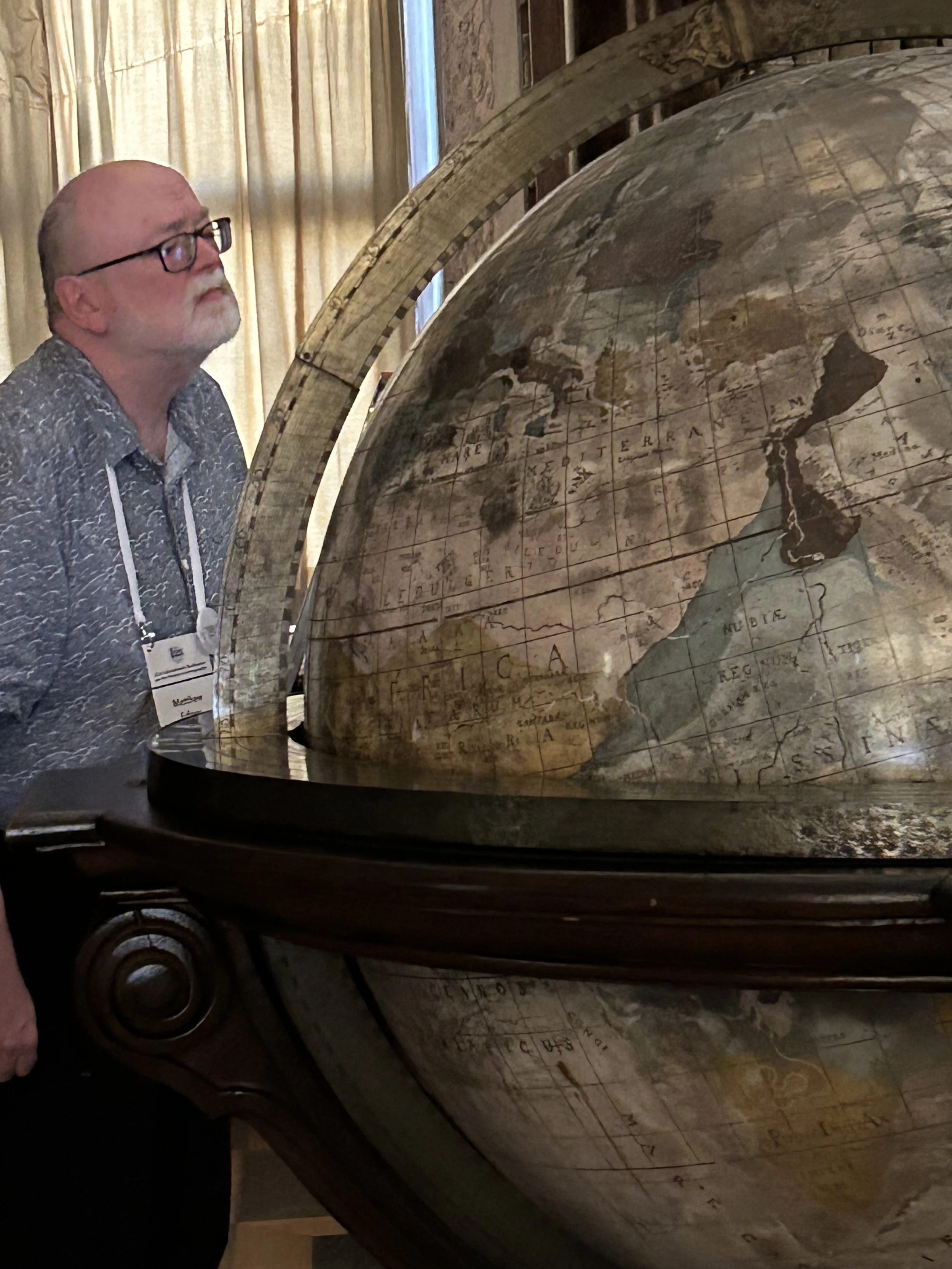
In the foreground is the large manuscript terrestrial globe, 127 cm ⌀, left incomplete on the death in 1730 of its maker, Caspar Pflieger (1665-1730), first curator of the Klementinum’s Mathematical Museum (Musaeum mathematicum). The other globe in the pair, a 127 cm ⌀ celestial globe made in 1727, is at the further end of the hall. There is a nice storymap with lots of fine pictures of both of Pflieger’s globes here.
The terrestrial globe, a detail, and a picture of me examining it:
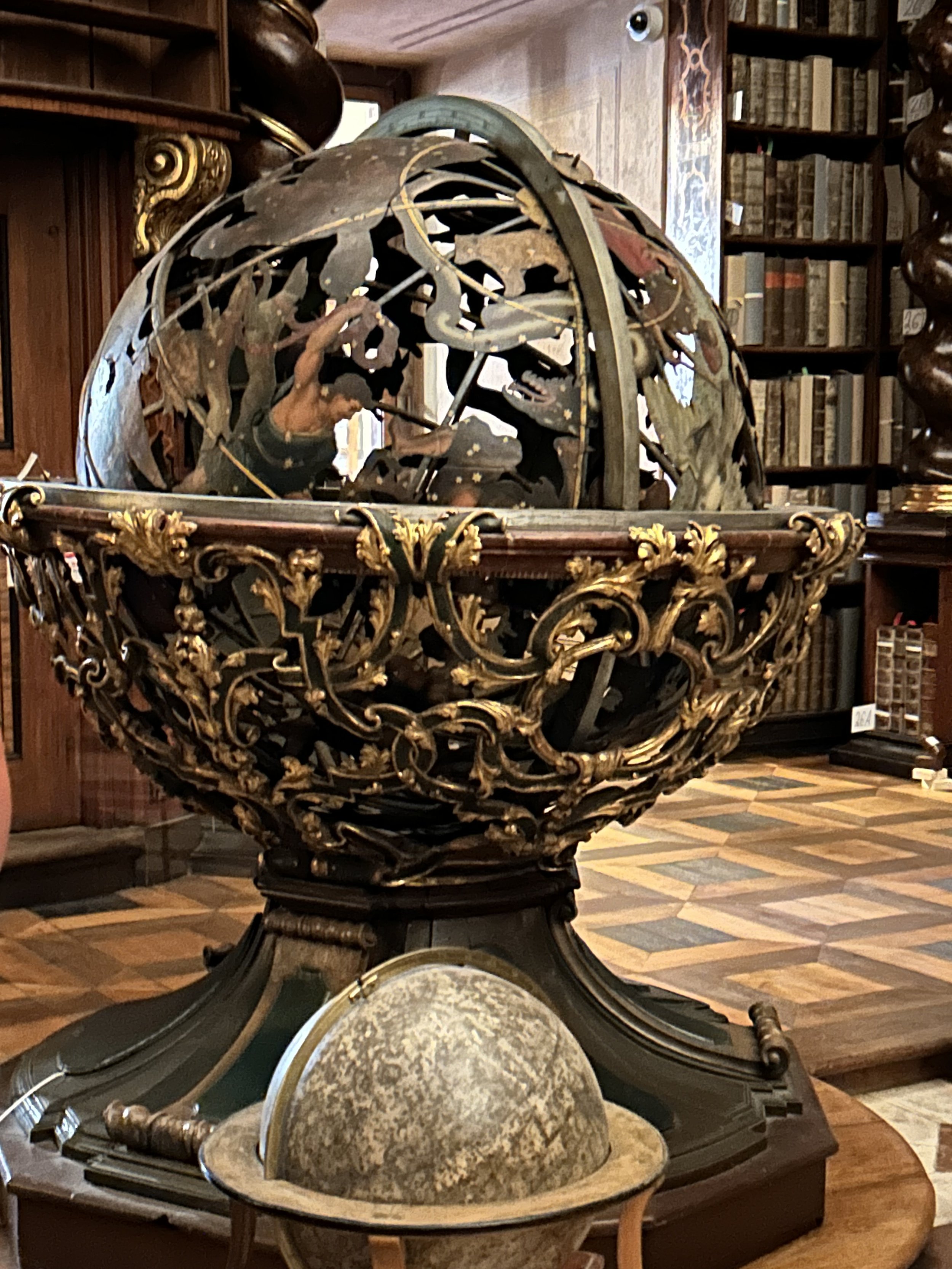
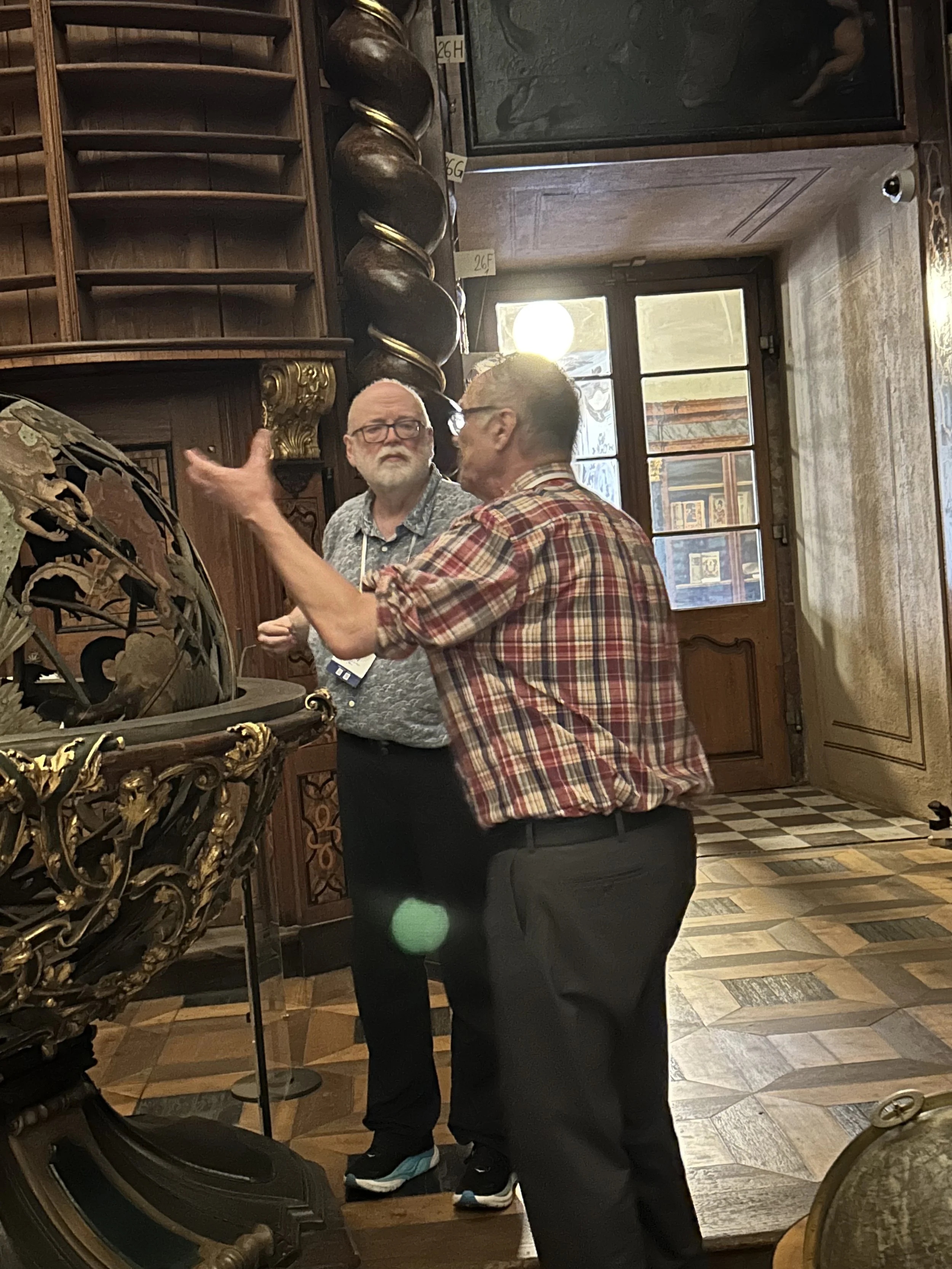
The celestial globe is not solid: a metal frame of celestial meridians and parallels bear numerous constellations and the Milky Way. Here is the celestial globe, with a smaller, printed globe in the foreground, together with a picture of me and Jim Akerman discussing it: